Legionella: history, microbiology,
biofilm and regulatory duties.
Everything a building manager needs to know in order to understand why legionellosis is still today the leading waterborne infectious disease in buildings, how it is transmitted, which systems carry it and what the law requires.
Philadelphia, 1976:
the outbreak that gave
the bacterium its name.
In July 1976, during the 58th American Legion convention at the Bellevue-Stratford Hotel in Philadelphia, more than 600 veterans gathered to celebrate the United States bicentennial. Over the following days dozens of delegates developed severe pneumonia: by the end of the outbreak there were 221 cases and 34 deaths.
For six months investigators ruled out one hypothesis after another: a terrorist attack, toxins, nickel carbonyl, even a CIA experiment. Only in December 1976 did Dr Joseph McDade, of the CDC, isolate the bacterium responsible, using guinea pig inoculation. In April 1977 it was named Legionella pneumophila and the disease was officially designated Legionnaires’ disease. The Bellevue-Stratford Hotel closed for good.
That outbreak proved that a building services system, in this case the air conditioning cooling tower, can turn into a disease vector on a large scale. It is the principle underlying all modern legislation on water safety in buildings.
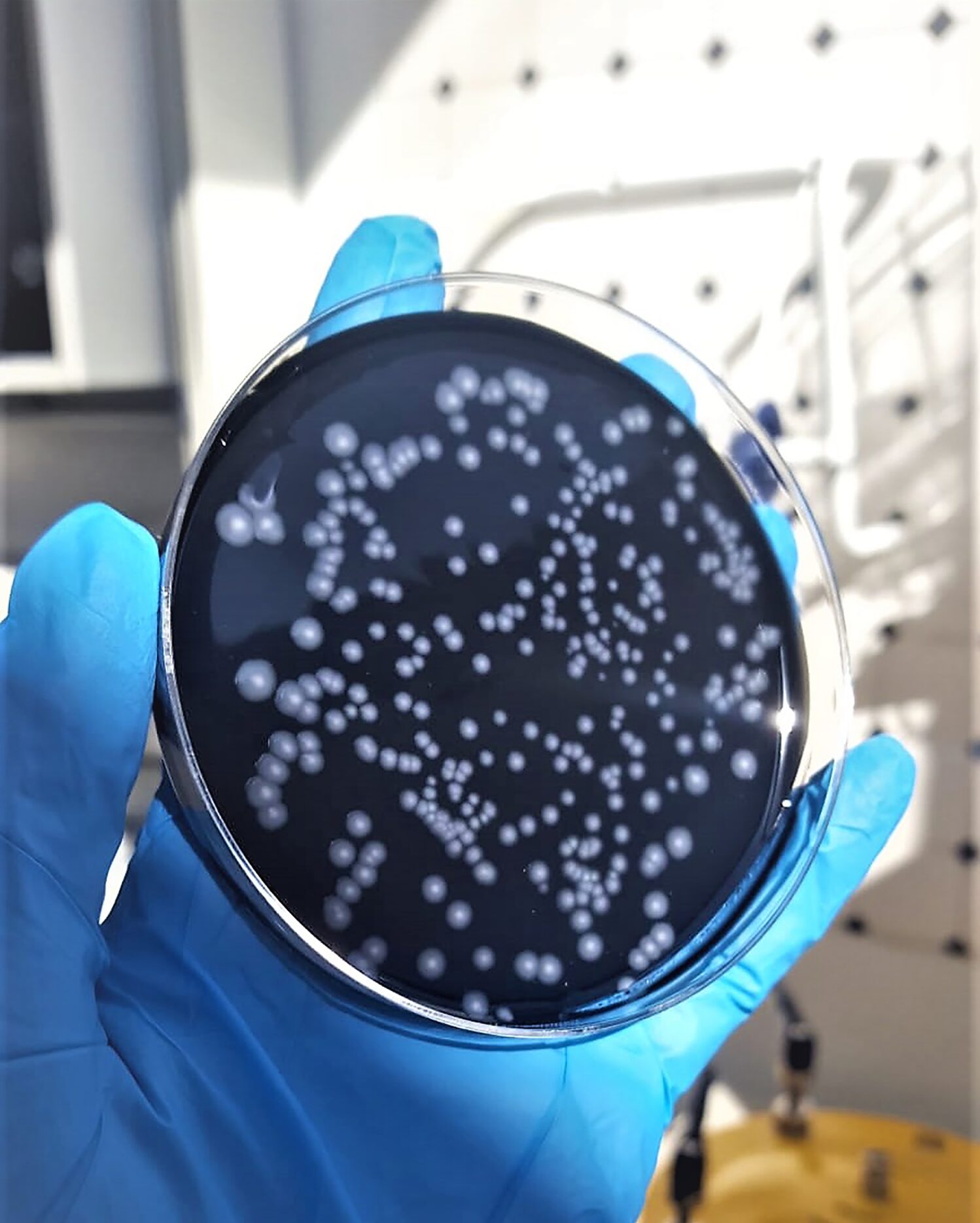
In Italy, cases
keep on rising.
Data from the national surveillance system coordinated by the Italian National Institute of Health (ISS) describe a curve that has risen steadily for over twenty years: partly because diagnosis is more widespread, partly because of an ageing population and the growing complexity of building systems.
cases notified in Italy in 2024
cases per million inhabitants (+18% on 2023)
fatality rate among cases with known outcome
mean age of cases; 75.4% are over 60
82.6% community-acquired
The great majority of cases are linked neither to travel nor to hospital stays: they originate in the buildings where people live and work.
8.9% travel-associated
Cases linked to stays in hospitality venues; they trigger notification duties and an environmental investigation with reporting to the ECDC.
3.4% nosocomial
Small in number but the most serious: fatality in immunosuppressed patients not treated promptly can far exceed the average.
Source: Italian National Institute of Health (ISS), national legionellosis surveillance system, 2024 data (EpiCentro / BEN).
A ubiquitous bacterium,
opportunistic and engineered.
The genus Legionella comprises Gram-negative bacilli, generally hydrophilic, which colonise natural aquatic environments. The problem arises when they meet a man-made system.
Ubiquitous
Found in lakes, rivers, springs and wetlands. It proliferates between 25 and 42 °C, survives between 6 and 63 °C, stays dormant below 20 °C and is rapidly inactivated above 60 °C.
Opportunistic
It behaves as an intracellular parasite of protozoa and amoebae: it multiplies inside them, sheltered from adverse environmental conditions, disinfectants included. This is the mechanism it then reuses to infect human alveolar macrophages.
Technological
It reaches mains pipework and building water systems, tanks, pipework, fountains and cooling towers, where it finds conditions permitting survival, growth and spread.
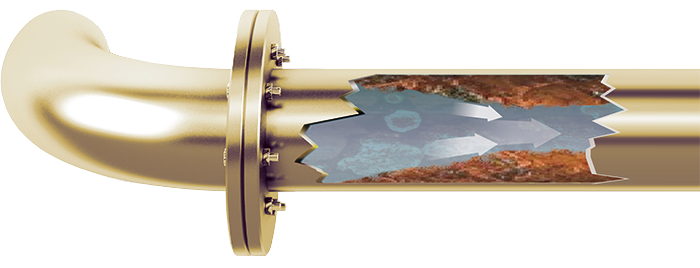
The factors that encourage proliferation
- Design and maintenance: ageing networks, dead legs, minimal or no flow, storage tanks, poorly balanced return circuits.
- Materials: porous, rough surfaces, rubber, plastic, cardboard and wood all encourage adhesion; rubber seals are prime accumulation sites.
- Scale: calcium and magnesium salts precipitate on heating to form limescale, whose porous structure shields the bacterium from disinfectants and temperature.
- Loose deposits and corrosion: rust, sand and solid particles create obstructions and localised corrosion sites, multiplying the points of attachment.
The real reason why
treatments fail.
Biofilm is a sessile community of micro-organisms embedded in a self-produced organic matrix and attached to the pipe walls. Its formation is governed by quorum sensing, the communication system by which bacteria respond to rising population density by activating stress response proteins (ASP, HSP) able to counter or repair damage from chemical and thermal agents.
survival of a planktonic micro-organism in sterile distilled water (Hsu, 1984)
survival in the VBNC state, viable but non-culturable, in sterile tap water (Steinert, 1997)
persistence of a sessile micro-organism associated with biofilm at 24 °C (Armon, 1997; Borella, 2005)
share of the bacteria in a water network that live protected inside the biofilm
Thermal shock, hyperchlorination, chlorine dioxide, monochloramines, ozone, peroxide and silver act on free-floating bacteria, not on the matrix. Once treatment stops, the biofilm releases bacteria again and the count returns to pre-treatment levels, often selecting the more resistant strains while attacking the pipework with corrosion and by-products (trihalomethanes, chlorites, chlorates, NDMA).
You breathe it in,
you don’t catch it.
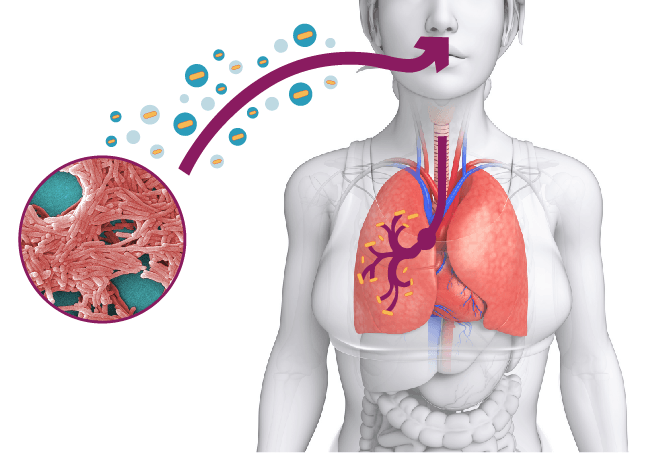
The route of transmission is inhalation of contaminated aerosol: micro-droplets generated by showers, taps, cooling towers, humidifiers, whirlpool baths, fountains and misting systems. Micro-aspiration of contaminated water or ice is also possible, particularly in hospitalised patients. There is no direct person-to-person transmission.
Pontiac fever
Non-pneumonic form. An acute, self-limiting flu-like illness, incubation from a few hours to 48 hours, lasting 2-5 days, resolving spontaneously.
Legionnaires’ disease
Pneumonic form. Incubation 2-10 days, up to 16 in some outbreaks. Fever, cough, breathlessness, myalgia, sometimes diarrhoea and confusion. It can progress to advancing pneumonia with respiratory and multi-organ failure.
The systems that
generate aerosols.
Every component that atomises, heats, stores or slows water down is a potential amplifier. In the risk assessment we map them all, one by one.
Domestic hot water networks
Calorifiers and storage, unbalanced return circuits, dead legs, thermostatic mixing valves, out-of-range temperatures at the outlets.
Cooling towers and condensers
Direct release of aerosol into the atmosphere, dispersing over kilometres: they are behind the widest community clusters.
Air handling systems and humidifiers
AHUs with humidifier sections, condensate trays, fouled coils, ductwork with organic deposits.
Drinking water tanks and storage
Thermal stratification, sediment on the base, unprotected vents, long residence times.
Outlets: showers, shower heads, aerators
The point of greatest exposure: aerosol released straight onto the user and stagnation in little-used end sections.
Pools, spas, fountains, misting systems
Whirlpool baths and ornamental or cooling misting systems produce fine, high-density aerosol.
It isn’t good practice.
It is a legal obligation.
Legionellosis prevention is required by a body of legislation that brings together public health, workplace safety and the quality of water intended for human consumption. The employer and the building manager are directly accountable for it.
Legislative Decree 81/2008
Biological risk from Legionella must be assessed in the risk assessment document (DVR) (Title X, biological agents). The employer must identify the prevention and protection measures for workers and third parties present in the building.
State-Regions Agreement of 7 May 2015 (no. 79/CSR)
The Guidelines for the prevention and control of legionellosis require every potentially at-risk building to draw up a risk assessment document, adopt control measures, appoint a responsible person, keep a register of works and communicate the risk.
Legislative Decree 18/2023
It transposes Directive (EU) 2020/2184 and extends the risk-based approach to the internal water distribution systems of priority buildings, with specific reference to lead and Legionella. Risk assessment and management must be under way by 12 January 2029, verified annually and reviewed every six years.
ISTISAN Report 22/32
They define GIDI, the internal water distribution system operator, the five building priority classes (A-E) and, for each one, whether a full WSP, a self-monitoring plan or a hygiene verification plan is required.
UNI, NADCA, HACCP
European UNI EN technical standards on plumbing systems, the NADCA ACR standard for the assessment and remediation of air handling systems, HACCP systems for catering, plus regional provisions that may be stricter still.
1. Risk assessment — survey of the systems with sampling where appropriate, at least every two years or annually, and in any case after alterations to the systems, refurbishment works or test results above threshold. 2. Risk management — containment measures, appointment of the responsible person, register of works. 3. Risk communication — information and training for managers, technicians and those responsible for the buildings.
The questions we are asked
most often about Legionella.
Which buildings are required to assess Legionella risk?
The duty applies to every workplace under Legislative Decree 81/2008 and, specifically, to the premises listed in the 2015 Italian national Legionella guidelines: healthcare facilities and care homes, hospitality venues, spa facilities, swimming pools and wellness centres, ships, and industrial plants with cooling towers. With Legislative Decree 18/2023 the risk assessment extends to the internal water systems of priority buildings: hospitals, care homes, childcare facilities, schools, hotels, restaurants, bars, sports and shopping centres, leisure and exhibition venues, prisons and campsites.
How often must the risk assessment be repeated?
The guidelines set a two-yearly interval, which becomes annual in higher-risk buildings. Reassessment is immediate in any case whenever conditions change: alterations or extensions to the systems, refurbishment works, long periods out of use, test results above threshold, the appearance of clinical cases. Legislative Decree 18/2023 also requires annual verification and an extensive review every six years.
Why don’t thermal shock or chlorination solve the problem for good?
Because they act on the bacteria free in the water but do not remove the biofilm matrix, where around 90% of the total bacterial count lives. After a shock, if the temperature falls back below 50 °C, recolonisation typically takes weeks or months. Thermal shock also causes scaling, corrosion and a scalding risk, while continuous chlorination generates by-products such as trihalomethanes, corrodes the pipework and is not compatible with drinking water standards at the concentrations genuinely effective against biofilm.
Are point-of-use filters enough on their own?
No. Absolute 0.2 µm filters deliver sterile water at the outlet and immediate protection for vulnerable people: they are the right measure in an emergency, in critical wards and during works. They do not, however, remove the biofilm upstream and their service life is limited; prolonged use without resolving the cause can reduce flow and allow biofilm to develop back up the line. They are to be used as a barrier, not as a structural solution.
What are the reference values in sampling?
The national guidelines set no single limit but a scale of actions proportionate to the concentration found (CFU/L) and to the context: healthcare facilities with immunosuppressed patients require far stricter action thresholds than an office building. Sampling must always be designed, the points, the method, pre-flushing or not, around the objective: checking colonisation of the network, or assessing the user’s actual exposure.
What should be done in the event of a cluster or a confirmed case?
Healthcare facilities and the physician must send the surveillance form to the local health authority (ASL) within 48 hours of diagnosis. Hospitality venues must inform the local health authority of cases associated with a stay; for clusters, a preliminary report must be sent to the ECDC within two weeks and a final report within six weeks of notification. At the same time an environmental investigation, immediate containment measures, typically point-of-use filters, and a remediation plan are set in motion.
Tell us about your system.
We design safe water and air.
Technical consultancy, risk assessment, bespoke design and tailored quotations for healthcare facilities, hotels, industry, public bodies, resellers and distributors all over the world.