Three different risks,
a single method
of assessment.
Legionella, drinking water quality under Legislative Decree 18/2023 and air hygiene cannot be addressed with the same tool. We assess them separately, each with its own criteria and regulatory references, and then bring them together in a single risk management plan for the building.
The real system first,
then the document.
Every assignment begins with a technical survey that reconstructs the functional schematic of the water and air distribution network — in most buildings it has never been documented — and measures its critical parameters on site.
We then apply an engineering-derived FMEA (Failure Mode and Effects Analysis) methodology: every component and every failure mode is weighted for severity of effect, probability of occurrence and detectability. The product of the three indices generates a risk priority number that ranks the work by real impact, not by habit or by leftover budget.
- System survey, functional schematic and census of outlets
- Mapping of hazards, hazardous events and critical control points
- FMEA analysis with severity, probability and detectability indices
- Risk assessment document ready for integration into the company DVR
- Improvement plan with priorities, timescales, responsibilities and cost estimates

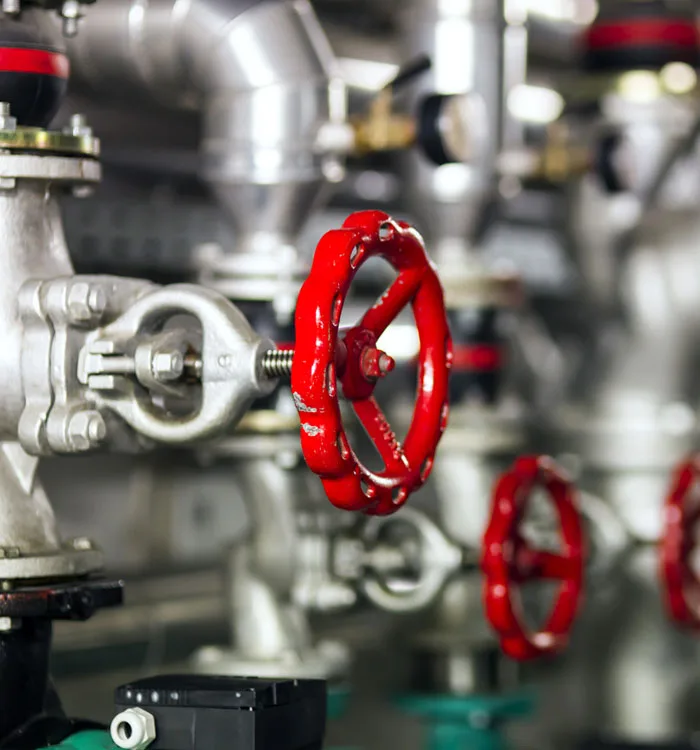
Legionella:
risk assessment
and control plan
Legionellosis risk assessment is not a formality: it is the analysis of how water, temperatures, materials and the real use of the building combine to favour or prevent proliferation.
- Risk assessment in accordance with the 2015 national guidelines for the prevention and control of legionellosis
- Integration with the obligations of Legislative Decree 81/08 on biological agents (Title X)
- Definition of critical control points, intervention thresholds and corrective measures
- Self-monitoring plan, works register and sampling plan
- Document management ready for inspection by the health authority
- Technical support in choosing between continuous treatments, periodic remediation and point-of-use barriers
Water Safety Plan
under Legislative Decree 18/2023
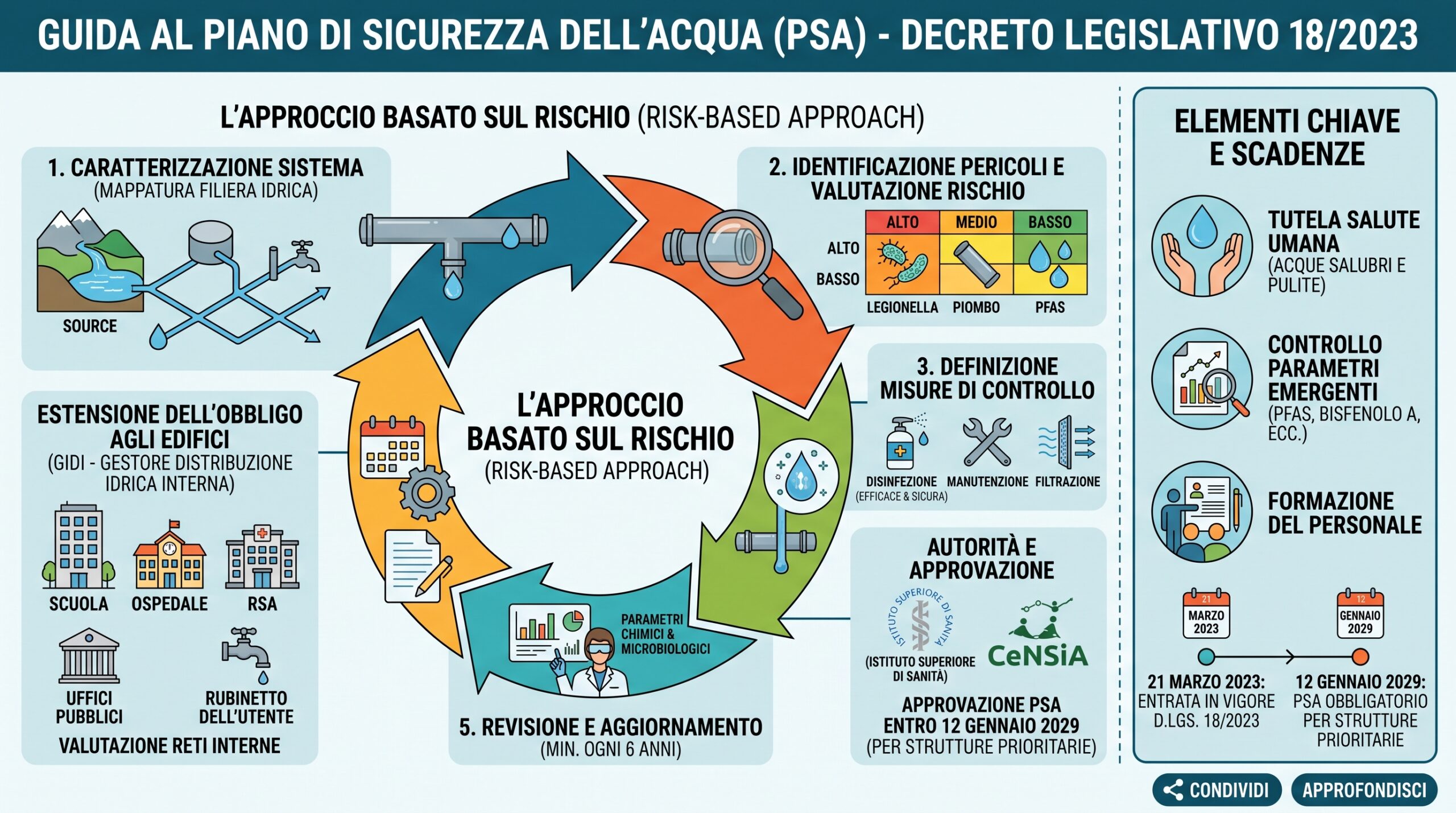
Legislative Decree 18 of 23 February 2023, which transposes Directive (EU) 2020/2184, shifts drinking water control from a logic of downstream sampling to one of risk management along the whole chain, including the distribution systems inside buildings.
For priority buildings the Water Safety Plan is not good practice but an obligation, with set deadlines. We draw up the WSP, train the in-house working group and support the organisation through the first full cycle of application.
Multidisciplinary team
The WSP requires a working group combining engineering, health and management expertise. We coordinate its formation and guide its work.
System description
Reconstruction of the water chain from the point of delivery to every outlet, with materials, age, treatments and uses.
Hazard analysis
Identification of microbiological, chemical and physical hazards, of hazardous events and of the existing control measures.
Operational monitoring
Definition of the parameters to be monitored continuously or periodically, with critical limits and corrective actions.
Verification and review
Analytical verification plan, internal audits, periodic review and updating of the WSP whenever the system is modified.
Documentation
Complete WSP dossier, ready for discussion with the local health authority and the water utility within the statutory timescales.
Air hygiene:
the risk that nobody
measures
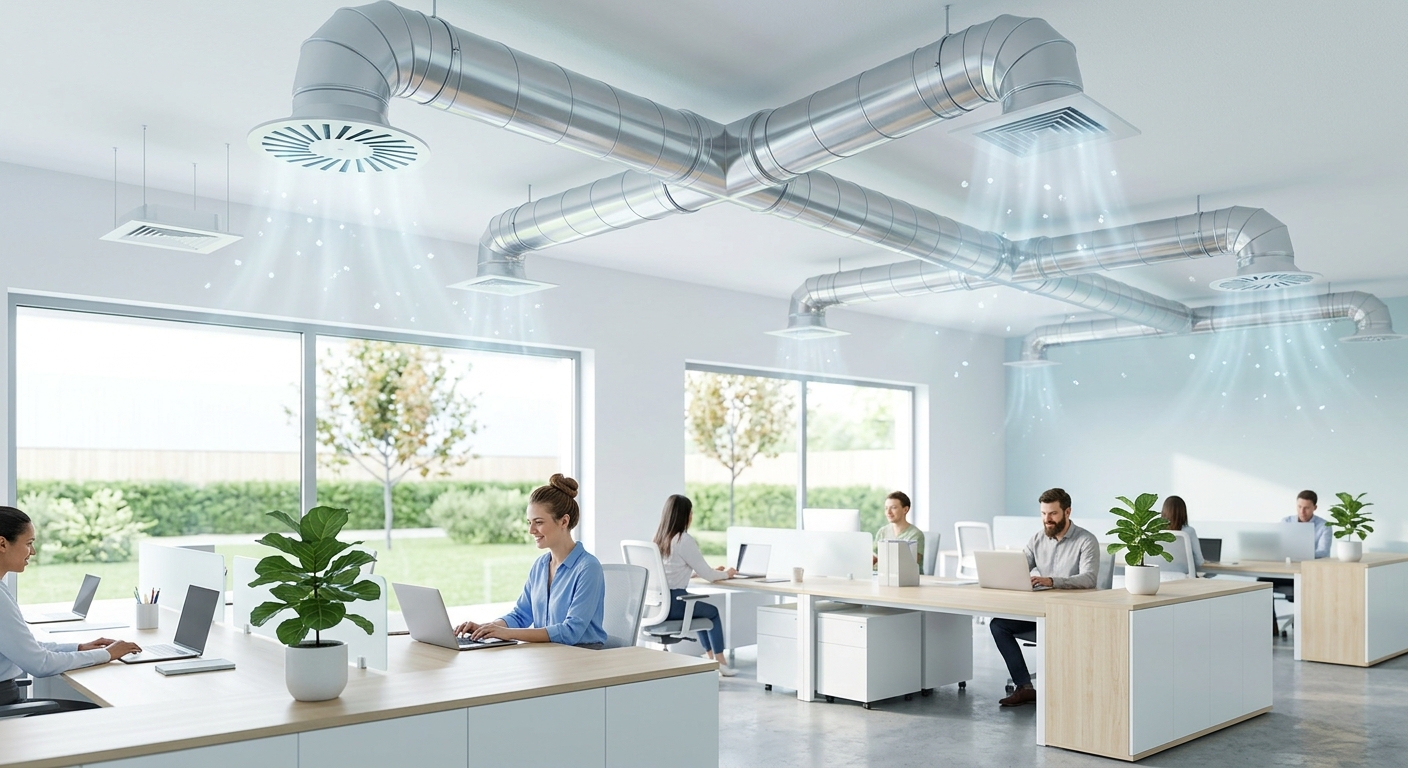
Air conditioning and ventilation systems are almost always assessed only for thermal output and consumption. The hygiene component — dust, biofilm in drain pans, fungal contamination, improper recirculation — stays out of every document.
- Hygiene risk assessment of the air handling system and of the air handling units
- Analysis of indoor air quality and of ventilation parameters
- Documentary check against the State-Regions Agreement of 5 October 2006 and the AIISA and NADCA standards
- Drafting of the system hygiene management plan with frequencies and responsibilities
- Definition of acceptability criteria and of post-inspection intervention thresholds
- Coordination with remediation work and with the routine maintenance plan
Whoever runs the system
must understand the risk.
A perfect plan applied by untrained staff produces useless data and measures that go unheeded. We design tailored training courses, in the classroom, on site or by webinar, with teaching materials and a certificate of attendance.
Legionella for RSPPs and healthcare management
Regulatory obligations, reading the risk assessment, management of cases and clusters, employer liability.
Legionella for technicians and maintenance staff
Temperatures, flushing, dead legs, outlet management, correct execution of control measures and completion of the register.
WSP and Legislative Decree 18/2023
Water Safety Plan methodology, working group roles, operational monitoring and verification.
Air hygiene
Inspection protocols, assessment criteria, remediation planning and hygiene management of the system.
Correct sampling
How and where to take samples, errors that invalidate the result, chain of custody, reading the test report.
Probiotic system
The principle of microbial competition, application protocols, efficacy indicators and limits of use.
Tell us about your system.
We design safe water and air.
Technical consultancy, risk assessment, bespoke design and tailored quotations for healthcare facilities, hotels, industry, public bodies, resellers and distributors all over the world.