Data is worth
only as much as
whoever collects it.
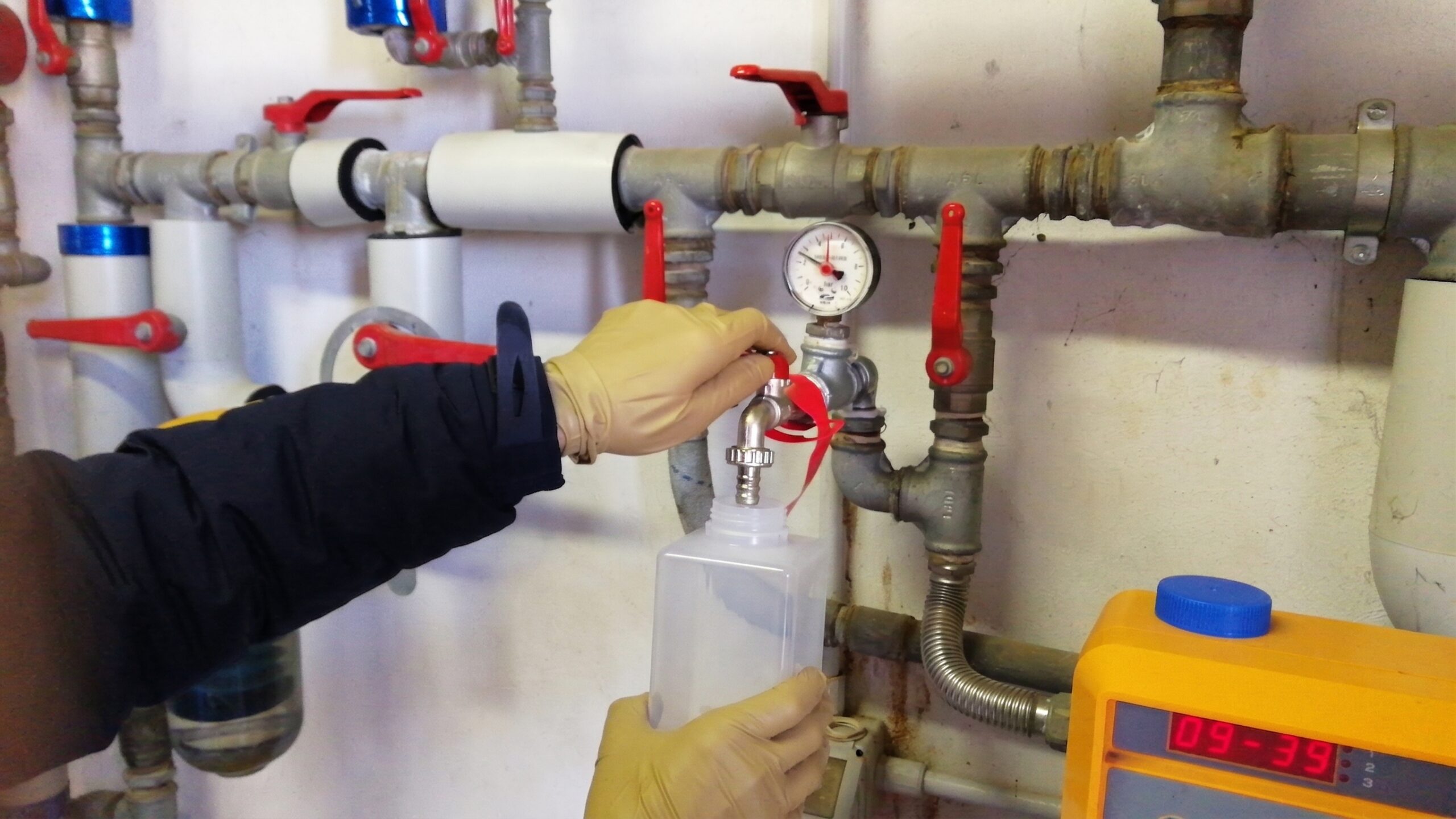
Sampling that is badly designed or badly executed produces figures that say nothing — or worse, reassure you wrongly. Our technicians are trained and qualified on sample collection protocols, and every sample is analysed by ACCREDIA-accredited laboratories.
Sample collection is a
technical act, not an
errand.
The difference between a representative sample and a useless one lies in details that cannot be improvised: sampling point, run-off time, temperature at the moment of collection, whether or not the outlet is disinfected, container, neutraliser, transport temperature and transport times.
- Staff trained on the sampling protocols of the 2015 Guidelines and the relevant UNI EN ISO standards
- Distinction between post-flush sampling (state of the network) and first draw (actual user exposure)
- On-site recording of temperature, residual chlorine and conditions at the moment of collection
- Documented chain of custody from the sampling point to the laboratory
- Continuous staff updating on methods and regulatory revisions
- Sampling plan designed around the objective, not around the minimum number of samples
Accredited methods,
test reports that
stand up.
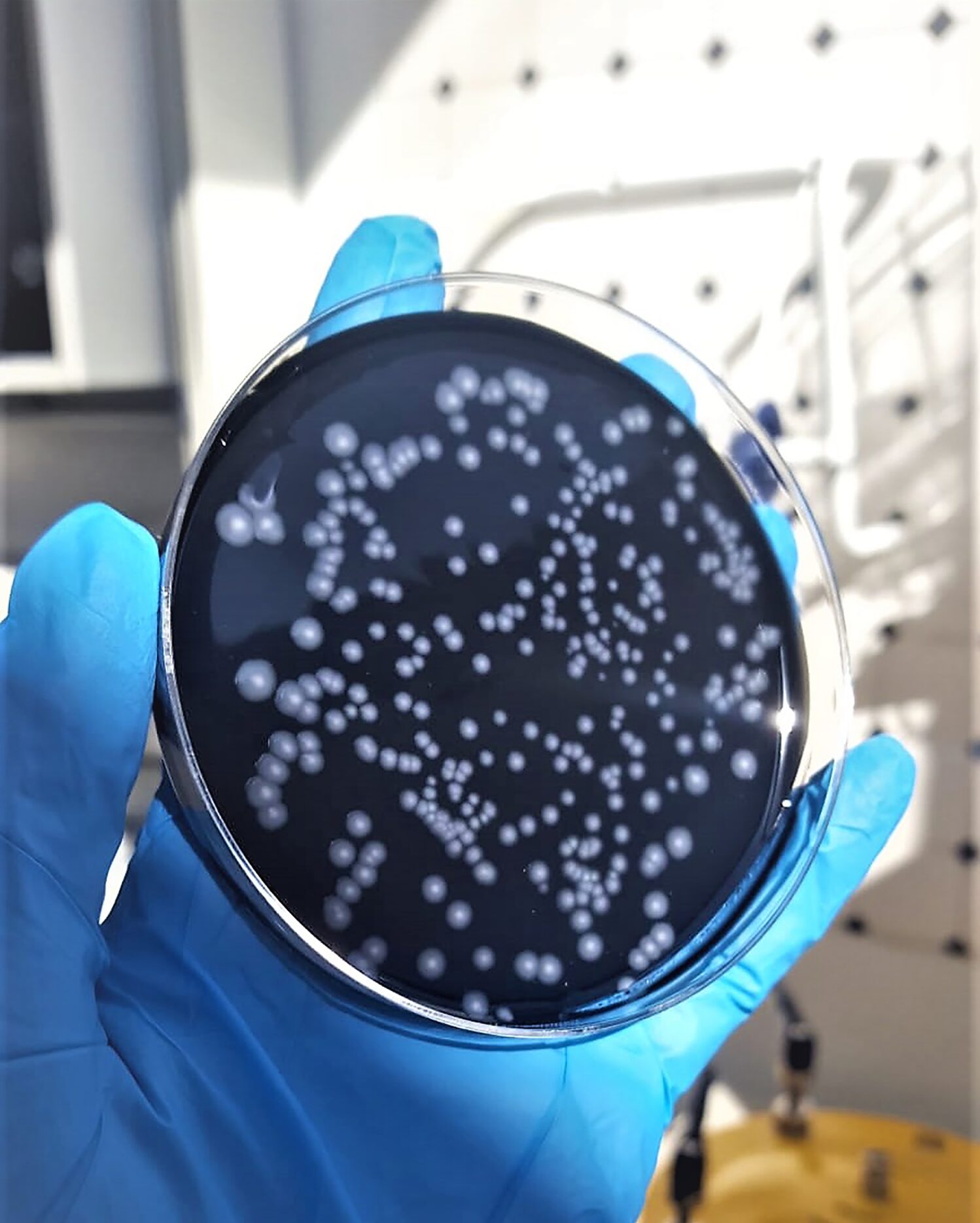
We work exclusively with laboratories accredited by ACCREDIA under UNI CEI EN ISO/IEC 17025. This is not a bureaucratic detail: the test report of an accredited laboratory stands up before the health authority, in an accreditation audit and in court.
For Legionella the reference is UNI EN ISO 11731; for drinking water compliance parameters, the methods set out by Legislative Decree 18/2023 and the ISTISAN reports. The result never arrives as an isolated number: we read it in the context of the system and translate it into operational consequences.
What we look for
in the water.
The analytical panel is built around the objective: Legionella surveillance, drinking water compliance checks, post-remediation control or the investigation of a clinical case each call for different parameters.
Legionella spp. and L. pneumophila
Detection and enumeration to UNI EN ISO 11731, with serogrouping on request. The cornerstone parameter of every control plan.
Pseudomonas aeruginosa
An indicator of biofilm and of critical conditions at terminal outlets, decisive in areas with vulnerable patients and in domestic water circuits.
Intestinal Enterococci
An indicator of faecal contamination, a mandatory microbiological parameter for drinking water compliance.
Escherichia coli and coliforms
Indicators of contamination and of the integrity of the internal distribution network.
Total bacterial count at 22 and 36 °C
A general indicator of the hygienic state of the network and of the effectiveness of treatments.
Chemical parameters and lead
Metals, hardness, chlorites and chlorates, disinfection by-products, lead from the materials of the internal network.
What the water
does not tell you.
The microbiological contamination of a building does not travel through water alone. Air and surfaces tell you the state of the air handling systems, of the cleaning procedures and of the areas at risk.
Air: total bacterial count
Active sampling onto culture medium with an orthogonal impact sampler, per unit of volume: the reference measure of the hygienic state of the environment.
Air: moulds, yeasts and fungal spores
Detection and enumeration of airborne fungal colonies with identification of the genera: Aspergillus, Cladosporium, Penicillium, Alternaria, Fusarium.
Air: particulate matter and dust
Determination of airborne dust and verification of the efficiency of the filtration systems.
Surfaces: microbial counts
Swabs and contact plates on critical surfaces, with enumeration of the total bacterial count and the fungal count.
Surfaces: indicator pathogens
Targeted detection of staphylococci, enterobacteria and other indicators in healthcare areas, professional kitchens and controlled-contamination environments.
Ducts and terminal units
Sampling of the internal surfaces of ducts, coils and condensate trays in support of the hygiene assessment of the system.
Internal checks
under the decree
of February 2023.
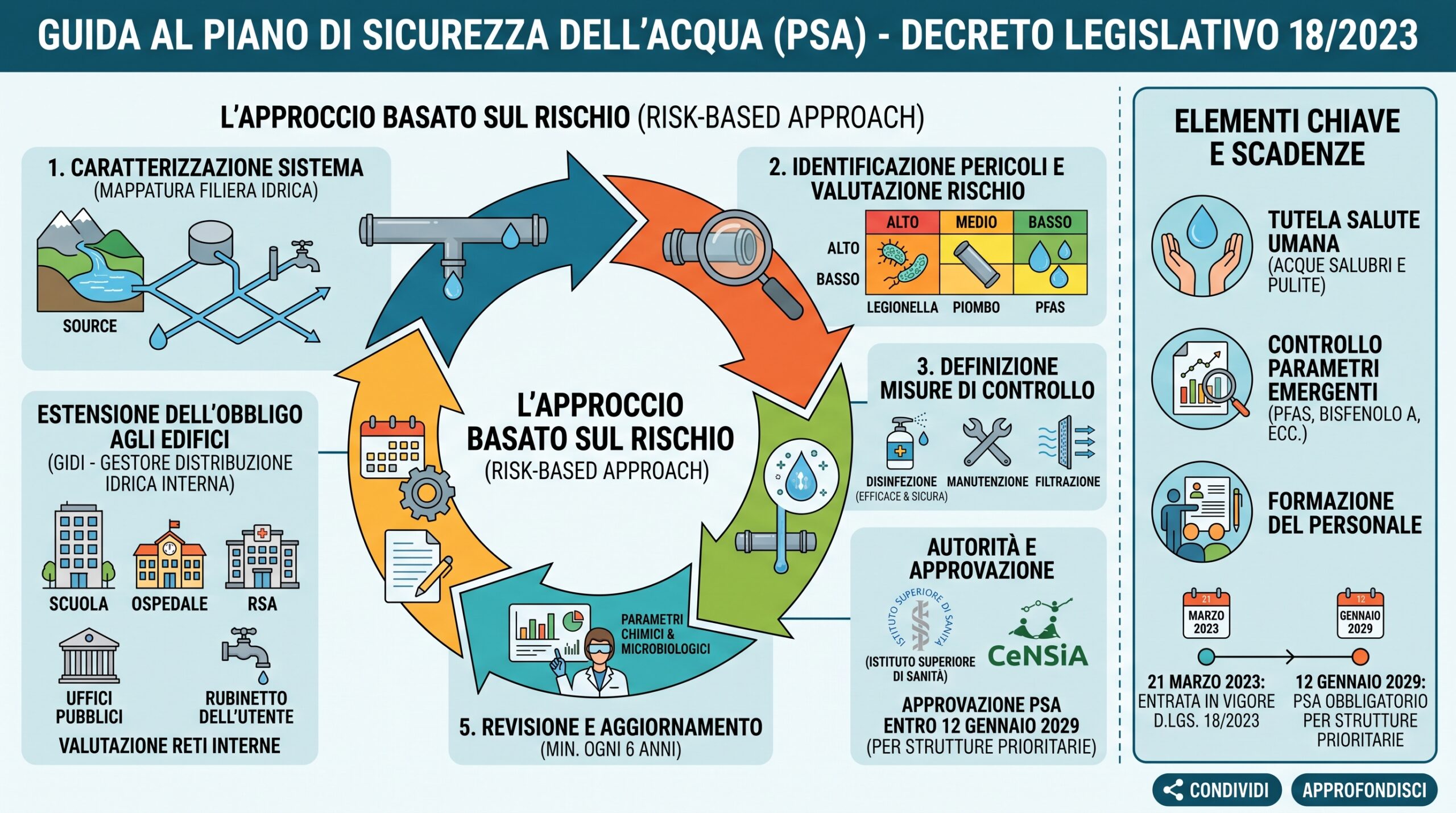
Legislative Decree 18 of 23 February 2023 transposes Directive (EU) 2020/2184 and carries responsibility for water quality right inside the building: the water utility answers up to the point of delivery, and from the meter onwards the owner or the manager of the facility answers.
- Internal checks on the internal distribution systems of buildings, beyond the point of delivery
- Microbiological, chemical and indicator parameters as set out in the annexes to the decree
- Specific attention to Legionella and lead in priority buildings
- Setting up the operational and verification monitoring plan integrated into the WSP
- Assessment of materials in contact with water intended for human consumption
- Reporting ready for discussion with the ASL and the water utility
Tell us about your system.
We design safe water and air.
Technical consultancy, risk assessment, bespoke design and tailored quotations for healthcare facilities, hotels, industry, public bodies, resellers and distributors all over the world.