Remove the biofilm,
not just lower
the count.
90% of the bacteria in a water network live inside the biofilm attached to the pipework, shielded from chlorine, chlorine dioxide, ozone and thermal shock. As long as the matrix remains, the bacterial load comes back. Our patented method removes it physically — and where needed we combine it with conventional techniques.
Air Pulse Technology:
mechanical action
across the whole network.
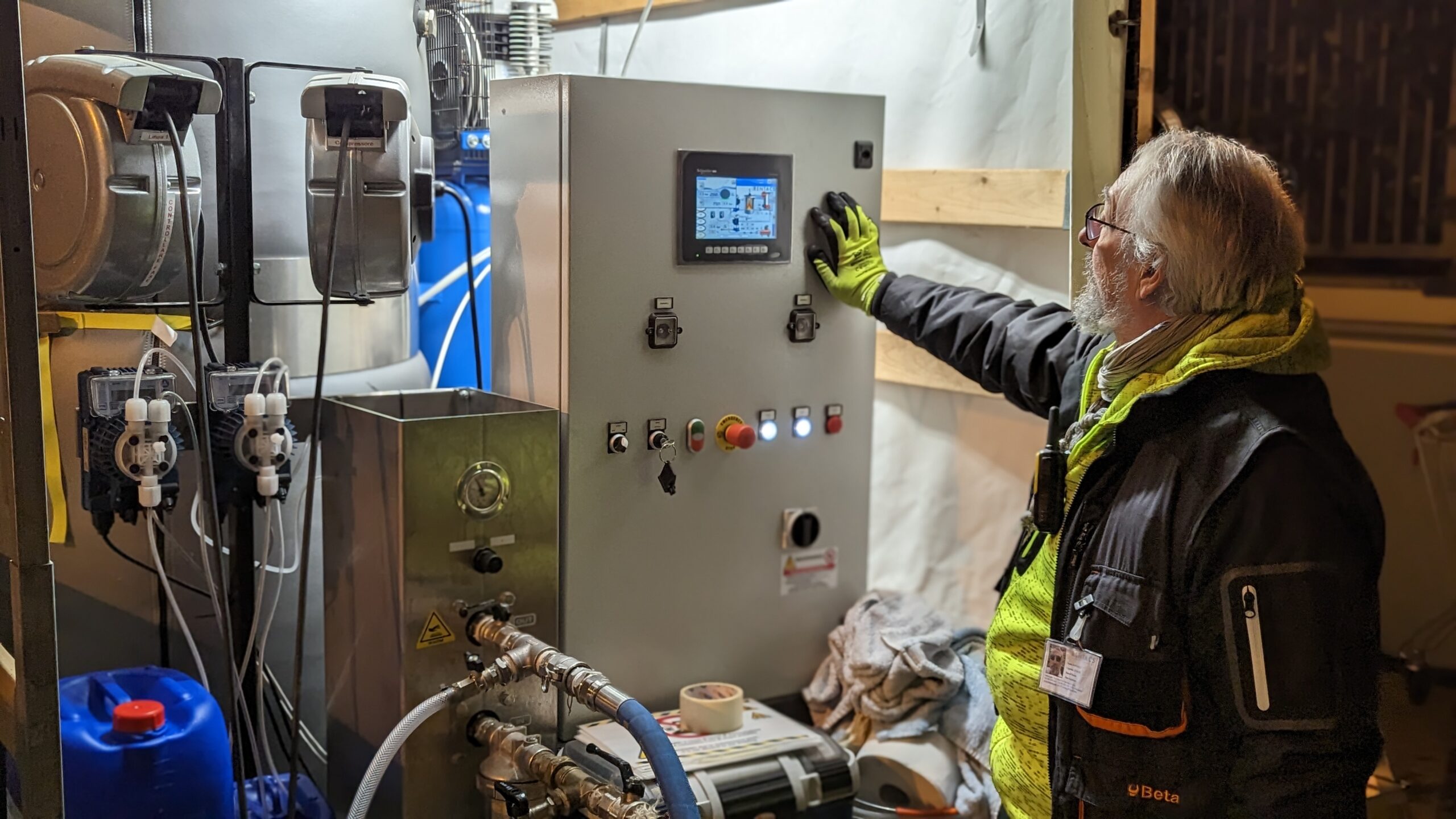
It is the first patented mobile solution combining cleaning, disinfection and air injection to remove bacteria and biofilm from water networks. It was developed in the Netherlands, where the drinking water culture is among the most rigorous in the world.
- No fixed equipment to install and no continuous chemical dosing
- Mobile intervention, carried out on the existing system with no building work
- Action across the whole network, including branches and little-used legs
- Analytical verification before and after treatment with accredited laboratories
- Applicable to domestic hot and cold water, recirculation loops and risers
Thermal treatment
Controlled temperature increase to destabilise the polymer matrix and reduce the biofilm’s adhesion to the pipe walls.
Air pulses
Compressed air pulses in water generate turbulence and mechanical action on the internal walls: the biofilm is detached, not merely attacked chemically.
Biodegradable biocide
Dosing of a biodegradable active agent that acts on the bacteria released from the matrix, leaving no persistent residues in the network.
Rinsing and neutralisation
Expulsion of the removed material and neutralisation of the product: the system returns to service with no fixed equipment installed.
There is no single
right tool.
The patent is our structural answer, but a real system often calls for a combination. We design the strategy around the system, not around a catalogue: sometimes an immediate shock is needed, sometimes continuous treatment, almost always a sequence.
Chemical shock disinfection
Hyperchlorination or treatment with chlorine dioxide, stabilised hydrogen peroxide or peracetic acid at high concentrations for defined contact times. Useful as a rapid intervention on limited networks, on tanks and in emergencies, with compliant discharge management and neutralisation.
Thermal shock disinfection
Raising the domestic hot water temperature above 70 °C with prolonged flushing at every outlet. It has to be designed: without timing control at each point-of-use and without scald protection it produces no result and creates risk.
Continuous proportional dosing
Installation of disinfection systems dosing in proportion to flow: chlorine dioxide, hypochlorite or stabilised hydrogen peroxide, with residual monitoring probes and alarms. The choice of technology depends on the materials, operating temperatures and intended use of the network.
Point-of-use barrier
0.2 µm membrane antibacterial filters on showers and taps: immediate protection for vulnerable people during remediation or while awaiting the definitive intervention.
Where we work.
Tanks and storage vessels
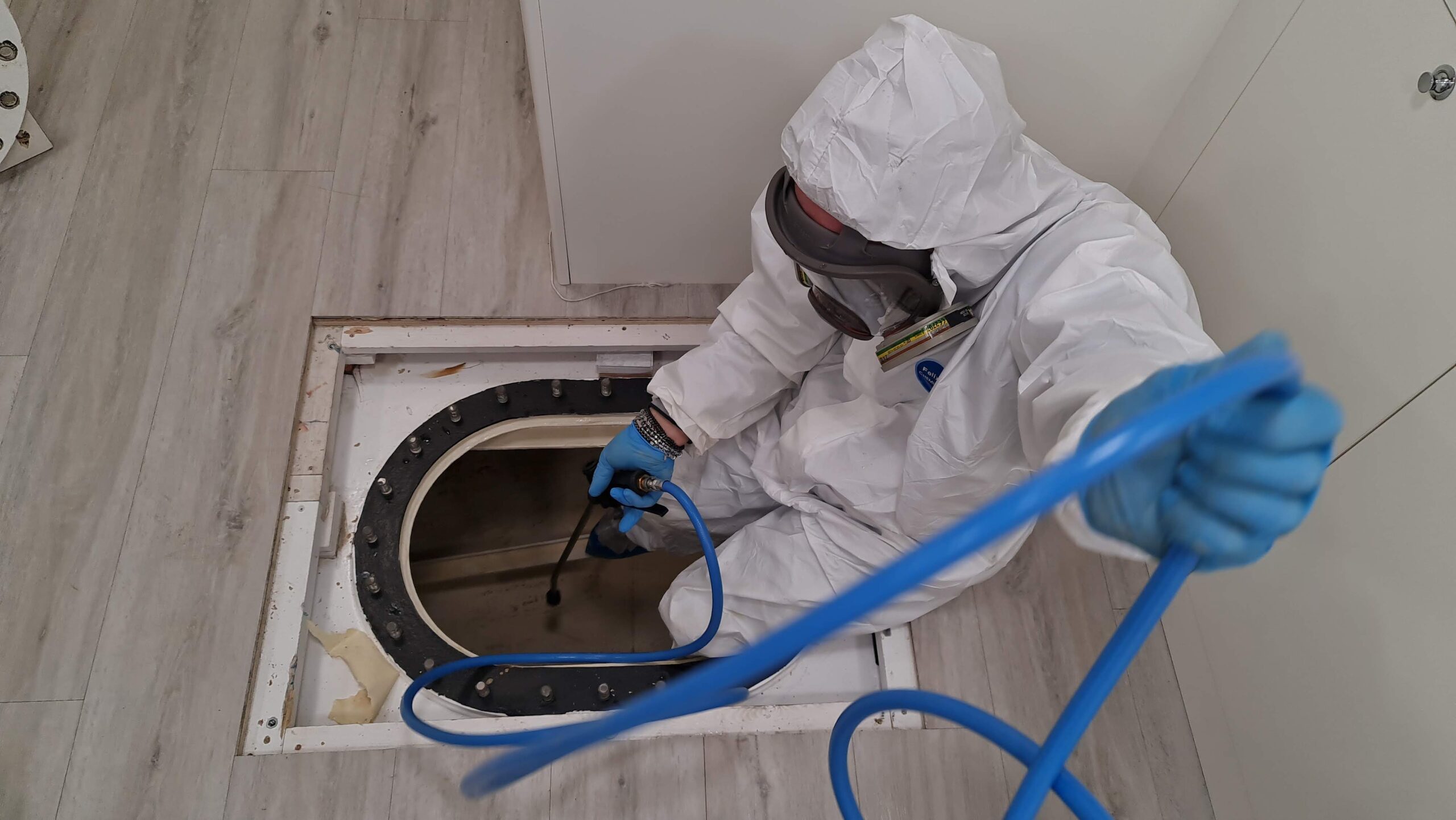
Remediation of drinking water tanks, reserve cisterns and storage vessels, with draining, removal of deposits, disinfection and analytical verification.
Calorifiers and heat exchangers
Descaling and disinfection of calorifiers, plate heat exchangers and instantaneous water heaters, where limescale deposits shelter the bacterial colony.
Outlets and tapware
Disinfection of thermostatic mixing valves, shower heads, aerators and hoses, and replacement of components that cannot be remediated.
Industrial circuits
Cooling towers, process cooling circuits, car wash installations and fire mains holding stagnant water.
Tell us about your system.
We design safe water and air.
Technical consultancy, risk assessment, bespoke design and tailored quotations for healthcare facilities, hotels, industry, public bodies, resellers and distributors all over the world.